






The mattress you searched for

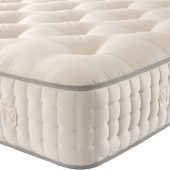
If you have been looking at the Harrison Spinks Caspian 13,750, the Ruby 12,500 is a Harrison Spinks model worth comparing.
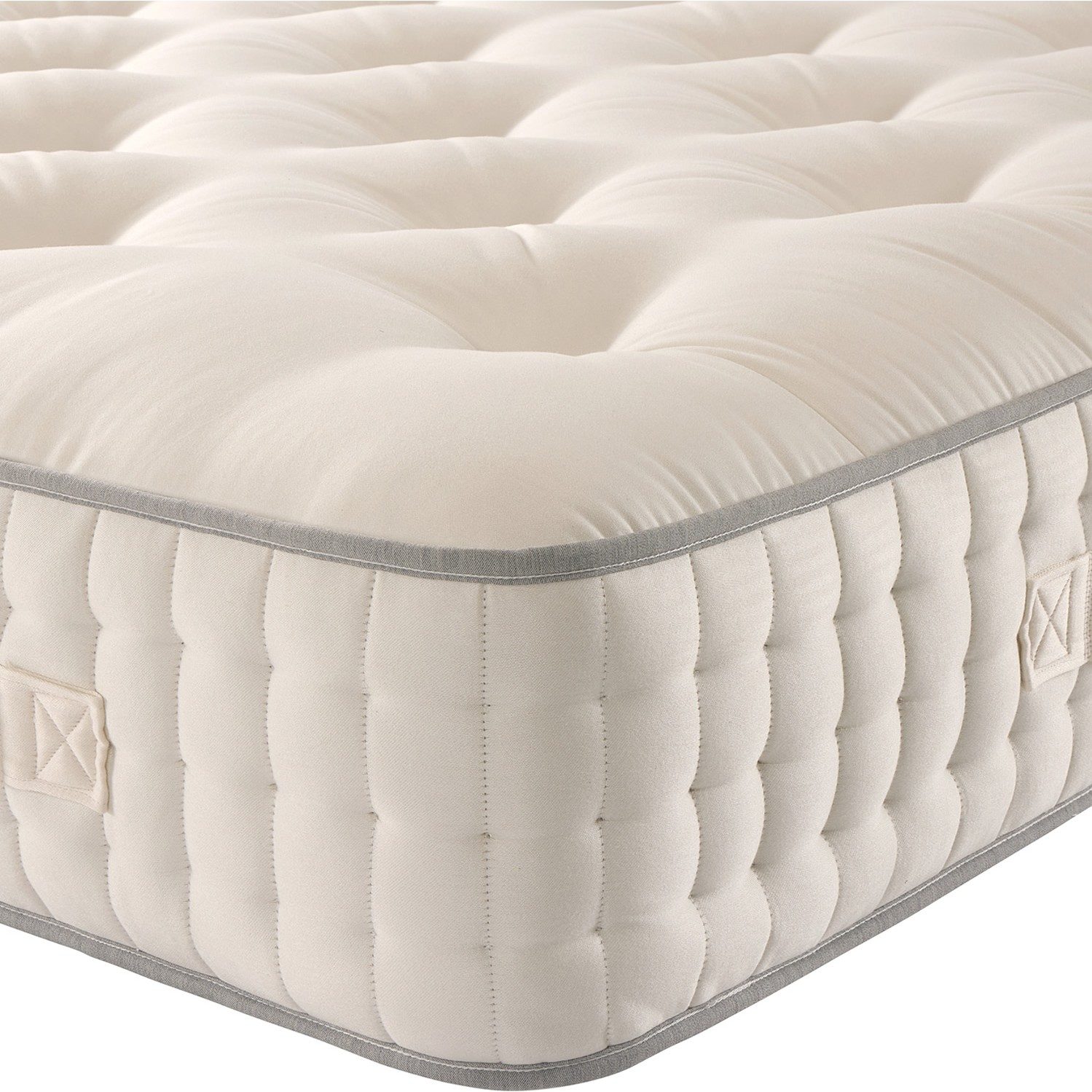
The Caspian 13,750 and Ruby 12,500 are not identical mattresses, but they share several important characteristics including Cortec pocket spring technology, natural fillings, seasonal-turn construction and a choice of tensions.
Seasonal Turn
Seasonal Turn
Both provide two seasonal sleeping surfaces.
13,750
12,500
The headline spring counts differ, but spring count alone should not be used to judge comfort.
Cortec Quad pocket springs
Cortec Quad pocket springs
Both use Harrison Spinks Cortec Quad pocket spring technology.
HD 3000 + HD 2500 micro springs + Posturfil pocket springs
HD 2500 micro springs + Posturfil pocket springs
The supplementary spring systems are configured differently.
British Wool & Viscose Blend - British Wool & Hemp Blend - Cotton & Flax Blend - Hemp
British Wool & Viscose Blend - British Wool, Hemp & Flax Blend - Cotton, Hemp & Flax Blend
Both use extensive natural upholstery
Gentle, Medium or Firm
Gentle, Medium or Firm
Both are available in the same three main tension choices.
3 rows
3 rows
Both have three rows of side stitching.
If the features of the Caspian 13,750 Seasonal Turn Mattress appeal to you, this is the Mayfield model we suggest including in your in-store comparison. It is not presented as an identical mattress: the specification above shows exactly where they are similar and where they differ.
View the Harrison Spinks Ruby 12500 Seasonal Turn Natural Pocket Mattress →Both use Harrison Spinks' Cortec™ Quad pocket spring technology, natural upholstery and seasonal sleeping surfaces. They are also available in the same principal tension choices. The main differences are found in their additional spring layers, natural filling blends and finishing details.
Not necessarily. Mattress spring counts can be misleading when viewed on their own because the headline figure includes different types and sizes of springs positioned throughout the mattress.
The Caspian combines its main Cortec™ Quad spring system with dual layers of HD 3000 and HD 2500 micro-springs, alongside Posturfil pocket springs. The Ruby uses Cortec™ Quad springs alongside HD 2500 micro springs and a layer of Posturfil pocket springs.
This means the difference between 12,500 and 13,750 shouldn't simply be interpreted as the Caspian having 1,250 additional conventional mattress springs. The two mattresses use different supplementary spring arrangements, which may influence how their comfort layers respond and feel.
Spring count is only one part of choosing a mattress. Its tension, upholstery, construction and how it feels when you lie on it are equally important.
Both mattresses make extensive use of natural fibres, although their upholstery blends aren't exactly the same.
The Ruby layers a British wool and viscose blend with a British wool, hemp and flax blend, and a cotton, hemp and flax blend. The Caspian layers a British wool and viscose blend with a British wool and hemp blend, and a cotton and flax blend, with its Ortho version adding a further layer of home-grown hemp for extra support.
Both draw on natural fibres grown and processed by Harrison Spinks on their own Yorkshire farm, so the sustainability credentials are closely matched, even though the specific blend proportions differ.
Construction-wise, they're very similar. Both feature three rows of hand side stitching for edge support and a 25cm border, and both are Seasonal Turn mattresses with a warming wool side for winter and a cooling cotton side for summer.
Both are also available in the same core range of tensions – Gentle, Medium and Firm – with a dedicated Ortho option for those wanting a firmer, more supportive feel.
In kingsize, the Ruby 12,500 is priced at £1,739, while the Caspian 13,750 typically retails from around £1,949, depending on retailer. For an £210 saving, the Ruby gives up one supplementary micro-spring layer (HD 3000) and a slightly different natural filling blend – while matching the Caspian on tension range, stitching, seasonal turn construction and Harrison Spinks' 10-year guarantee.
For most sleepers, the practical difference between the two will be subtle. The Caspian's additional spring layer may suit those who prefer a touch more contouring support, while the Ruby offers very similar comfort and construction at a lower price point.
Mattress manufacturers can produce different models and specifications for different retailers and retail groups. Similar-looking mattresses may therefore have different model names, spring counts, fillings or construction. Our comparison guides do not claim that differently named mattresses are identical. They are designed to explain published specification differences and help you identify models that may be worth trying.